

Uganda prepares to launch major oil projects
Oil production at the Kingfisher field in Uganda is expected to begin by the end of the year, with operations at the larger Tilenga field set to start next year. Combined output could reach 190,000 barrels per day by 2027, which will have a significant impact on the country's economic growth.
Petrus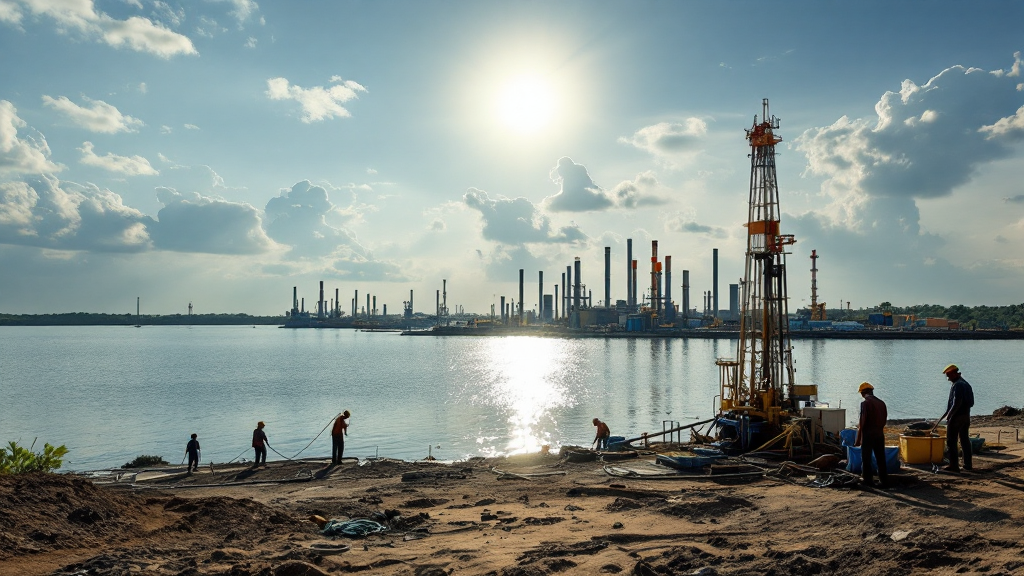
The first oil from the Kingfisher field in Uganda is expected to be produced in September this year. The field is located beneath Lake Albert and is operated by CNOOC International. Extraction will be carried out using wells drilled from the lake shore, with the oil transported to a central processing facility with a capacity of 40,000 barrels per day.
Subsequently, the oil will be transported to the entry point of the East African Crude Oil Pipeline (EACOP), which stretches 1,443 kilometers and ends at the port of Tanga in Tanzania.
Next year, production volumes are expected to increase with the commissioning of the larger Tilenga field, situated on the northern shore of Lake Albert and operated by TotalEnergies. The French company TotalEnergies owns nearly 60% of the shares in the Kingfisher field, although it is not the operator.
Oil production at Kingfisher is anticipated to begin before the end of the year, and combined output from the Kingfisher and Tilenga fields is projected to reach 190,000 barrels per day by mid-2027.
Construction of the central processing facility (CPF) at Kingfisher is 99% complete, with preparations for commissioning at 74%. Of the 31 planned production wells, 22 are ready for operation. The Tilenga project is over 70% complete, with more than 215 wells drilled—exceeding the number required to start production. Construction of the Tilenga central processing facility and related infrastructure, including a drilling support base, is at an advanced stage and will be finished in time for production launch.
The EACOP pipeline is 93% complete, with construction work at 94% and mechanical work at 89.9% completion.
The total cost of the Tilenga, Kingfisher, and EACOP projects is estimated at around $18 billion. According to the national regulator PAU, these projects are already impacting the country's economic growth and could lead to a significant increase in Uganda's GDP by 2027.