

People mastered horseback riding long before selective breeding.
A new study shows that horseback riding and the use of horses began long before the emergence of modern breeds and intentional selective breeding—it was a lengthy cultural process, not the result of a single mutation.
Cursus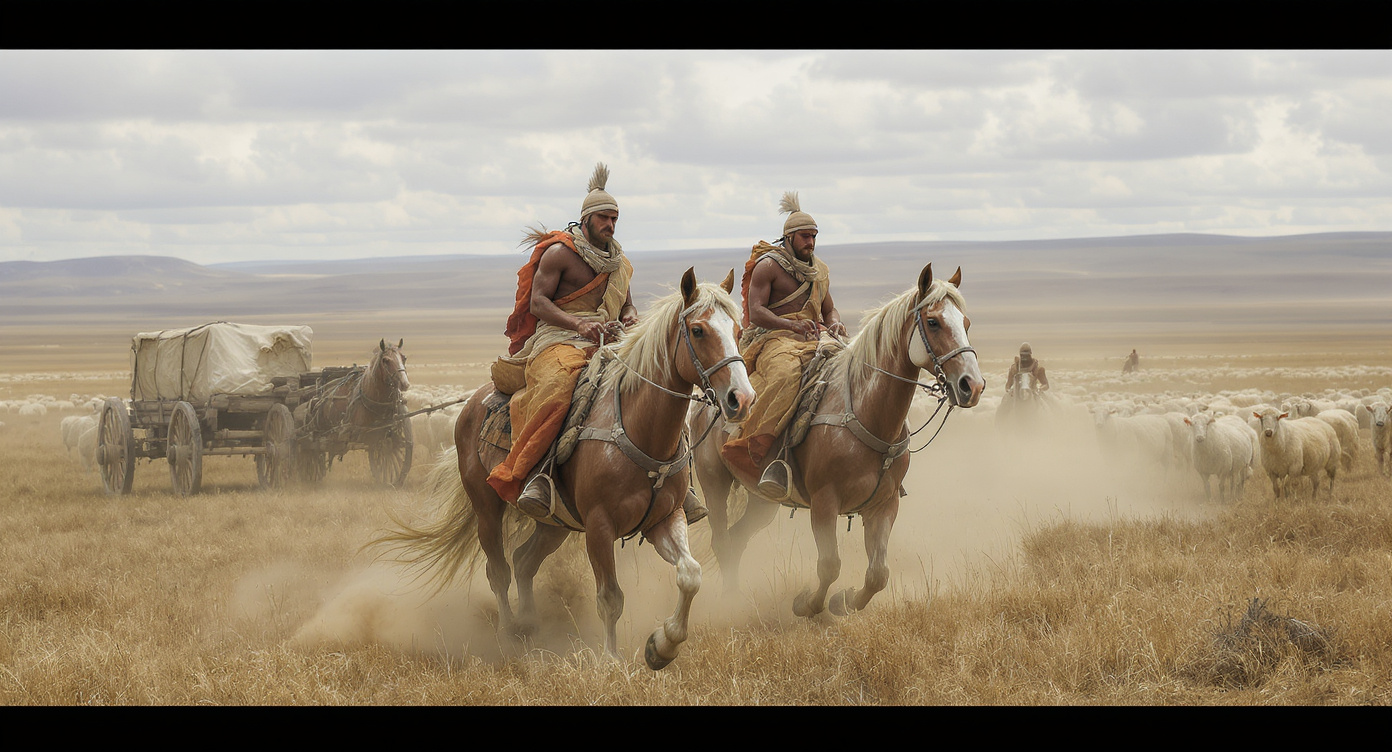
Representatives of the Yamnaya and Botai cultures practiced horseback riding, bred horses, and consumed mare’s milk as early as the 4th millennium BCE, long before the emergence of modern horse breeds. Genetic changes in horse populations that occurred around 2200 BCE did not mark the beginning of horseback riding, but rather were the final stage of a long process of artificial selection.
Genetic Research and Archaeological Evidence
In recent years, paleogenetic methods have dominated the study of ancient history. Large-scale DNA analyses have shown that the ancestors of modern domestic horses (DOM2 cluster) rapidly spread across Eurasia around 2200 BCE. These animals possessed mutations associated with a strong spine and a calm temperament. Based on this data, a theory emerged suggesting that horse domestication was linked to the appearance of a favorable mutation, and that before this, horses were supposedly used only for meat.
However, a group of archaeologists and anthropologists conducted a new analysis of scattered paleontological and archaeological data from Eastern Europe and Central Asia. They compared deformations in human skeletons, microscopic wear marks on the teeth of ancient horses, protein residues in human dental calculus, and the construction features of the earliest wheeled vehicles.
Signs of Horseback Riding and Horse Use
Analysis of the remains of Yamnaya culture individuals (3200–2600 BCE) revealed that about 20% of adult men had pronounced changes in the bones of the pelvis, hips, and spine, characteristic of regular horseback riding without a saddle. Such changes occur when it is necessary to tightly grip the animal’s sides with the legs. The theory that these injuries could have resulted from riding bulls or traveling in carts was rejected, since bronze-age carts had no seats, and the broad back of large cattle is unsuitable for constant riding.
On the premolars of horses from the Botai culture (around 3500 BCE), characteristic enamel wear was found, which, as experiments with modern mustangs have shown, results from rope bridles and dust entering the animal’s mouth. Additional evidence came from traces of horse milk peptides in the dental calculus of Yamnaya individuals, indicating that mares were being milked as early as the beginning of the 3rd millennium BCE.
The Development of Military Use of Horses
The research also explained why cavalry armies appeared only around 1200 BCE, despite horseback riding being practiced two thousand years earlier. In the first millennia, horses were mainly used as working transport by shepherds, allowing them to control large flocks of sheep. Using the heavy bronze-age bow on horseback was physically impossible. True light cavalry only emerged with the invention of the short composite bow, which significantly changed military tactics.
Conclusion
The domestication of horses was not the result of a sudden spread of a favorable genetic mutation, but rather a centuries-long process of cultural innovation. People tamed horses from different genetic lines and mastered horseback riding long before targeted breeding produced the breeds that eventually displaced their wild competitors.