

Samsung will build Malaysia's first FSRU terminal
Samsung Heavy Industries will build Malaysia's first floating LNG storage and regasification terminal, which will provide additional gas for power plants and strengthen the country's energy infrastructure. The RGT-3 facility in Lumut is expected to be operational in the second quarter of 2029.
Petrus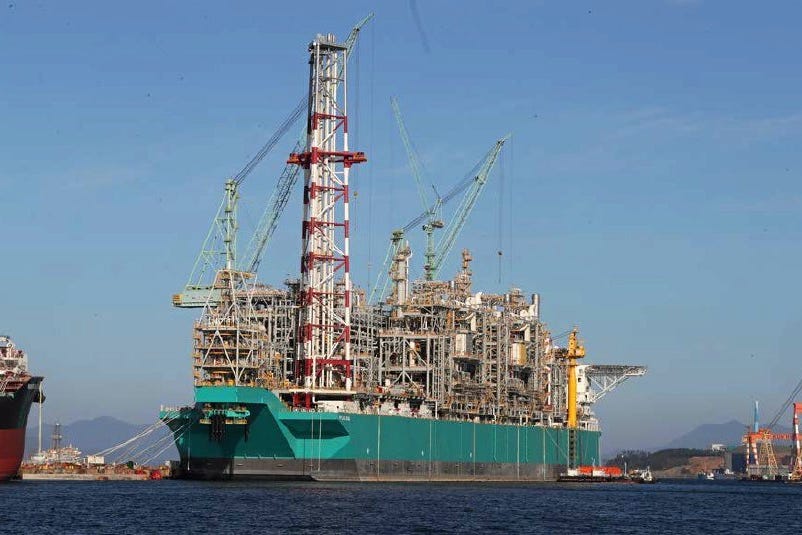
South Korean company Samsung Heavy Industries has signed a contract worth 484.8 billion won (US$328.14 million) to build a new floating storage and regasification unit (FSRU) for liquefied natural gas for MISC. This facility will be located off the coast of Malaysia to serve the needs of Petronas Gas.

In Malaysia, liquefied natural gas is produced at nine lines of the Petronas LNG complex in Bintulu, Sarawak, as well as at Petronas’ floating liquefaction units — PFLNG Satu and PFLNG Dua. Most of the LNG produced is exported, and the country began importing LNG 13 years ago through the RGT-1 onshore terminal in Melaka.

On April 30, Petronas Gas received approval from Malaysia’s Ministry of Economy to build the country’s third LNG regasification terminal. The RGT-3 terminal in Lumut, Perak, will become Malaysia’s first facility based on the FSRU concept.

On the same day, Petronas Gas sent MISC a letter of intent regarding the supply, operation, and maintenance of the facility. RGT-3 is designed for a capacity of 500 million cubic feet of gas and will have storage for 170,000 cubic meters of LNG.

After conducting technical and commercial assessments of the new gas infrastructure needed to meet future demand on Peninsular Malaysia, a Petronas subsidiary submitted an application to the national energy commission (Suruhanjaya Tenaga) to develop a new LNG import scheme based on the FSRU in Lumut. Commercial operations are expected to begin in the second quarter of 2029.

The regasified gas will be delivered via a connecting pipeline from the RGT-3 shore and jetty facilities to the existing Peninsular Gas Utilisation (PGU) pipeline system.

MISC’s long-term contract, set for 20 years, is expected to take effect in 2029. The letter of intent outlines the main terms that will be included in the final FSRU service agreement.

Samsung Heavy Industries is scheduled to deliver the new floating terminal by February 15, 2029. The vessel owner, MISC, will make a deposit and further payments as construction progresses.

For MISC, this project will be its first in the FSRU segment, allowing the company to leverage its technical and operational experience in LNG tankers and floating storage, while also strengthening its strategic partnership with Petronas in developing Malaysia’s energy infrastructure.

Petronas Gas expects that RGT-3 will be able to meet additional gas demand for power plants with a total capacity of about 3.5 GW on Peninsular Malaysia.

The company is also considering bringing in a partner for joint implementation of the project, which will be regulated by Suruhanjaya Tenaga, with tariffs determined based on the Incentive-Based Regulation (IBR) mechanism. Tenaga Nasional (TNB), an energy company, is being considered as a potential partner, but this information has not been independently confirmed.

Petronas Gas has highlighted risks associated with the RGT-3 project, including possible delays due to unforeseen circumstances during construction or procurement, delays in obtaining necessary permits, and potential cost increases due to market volatility. Another challenge could be the inability to secure financing within the planned timeframe.

The company stated its intention to apply balanced project management methods and stakeholder engagement to minimize these risks.