

Internal Changes of the Sun Reveal the Secrets of Its Cycles
A new study has shown that the Sun's internal structure changes even during periods of solar minimum. This data will help improve predictions of future solar cycles and space weather.
Cursus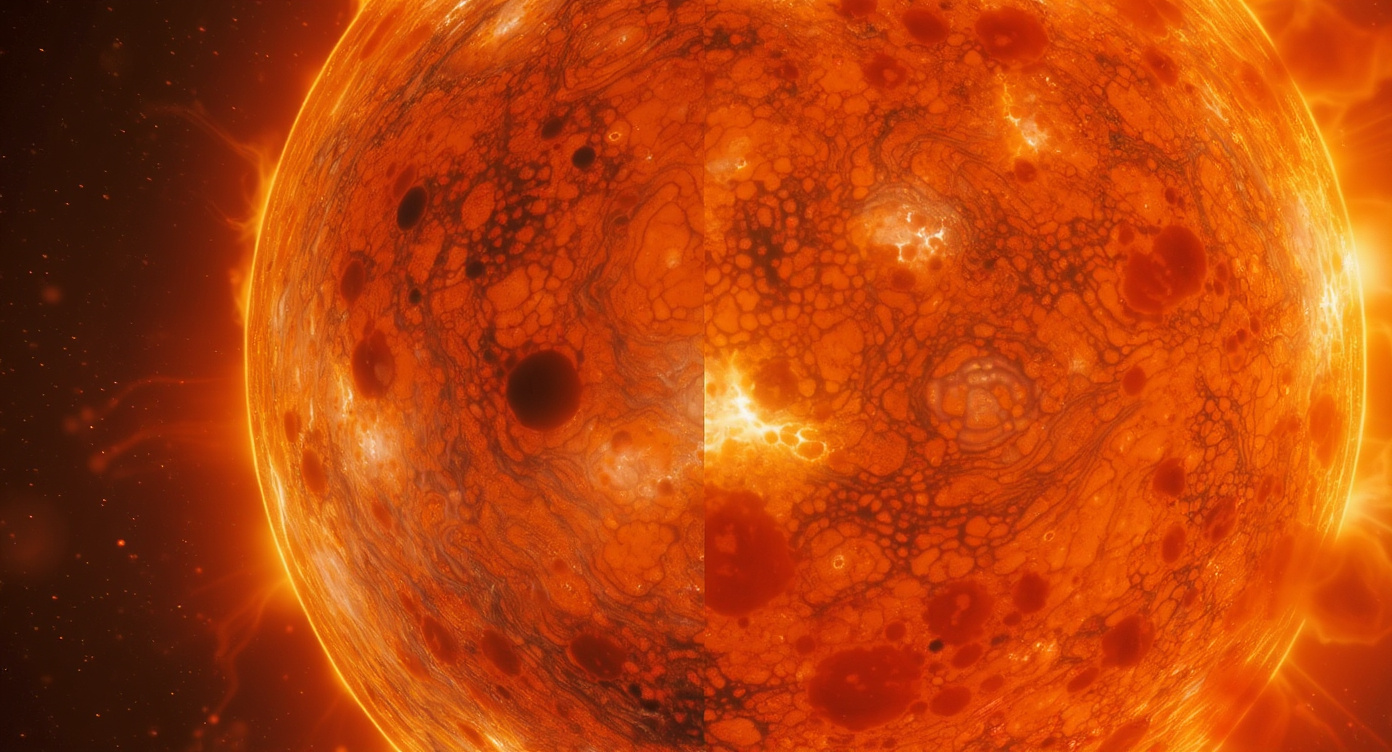
The Sun goes through recurring phases known as solar cycles. During research, four solar minima were analyzed, which made it possible to identify minor changes in the Sun’s internal structure during each of these periods. This data can help improve the accuracy of future solar cycle predictions.
Features of the Solar Cycle
The solar cycle lasts about 11 years and includes two main stages. The first stage is the solar maximum, when solar activity peaks, with sunspots and solar flares appearing. The second stage is the solar minimum, characterized by reduced activity and weaker magnetic fields.
Changes in the Sun’s Internal Structure
It was previously believed that the Sun’s internal structure remained unchanged during solar minima. However, new studies have shown this is not the case. Using the Birmingham Solar-Oscillation Network (BiSON), which conducts round-the-clock observations, scientists collected data on solar oscillations.
Research Methods
Over 40 years, data was gathered covering four solar minima between cycles 21 and 25. The main method used was helioseismology, which allows scientists to study the Sun’s internal structure by analyzing vibrations caused by sound waves. Measurements of these vibrations on the Sun’s surface from Earth provide information about the temperature, pressure, and density inside the star. Researchers discovered a phenomenon called the “helium ionization glitch,” which occurs when helium atoms ionize at high temperatures, causing slight changes in sound waves.
The Unusual Minimum of 2008–2009
The minimum between cycles 23 and 24, which occurred in 2008–2009, was notable for its duration and extremely low solar activity. The Sun’s internal conditions during this period were significantly different from other minima. These findings can help us better understand stellar magnetic activity, improve predictions of future solar cycles, and enhance forecasts of space weather that affects Earth.