

GE has tested a hybrid engine for passenger airliners
GE Aerospace has successfully tested a hybrid turbofan engine of the megawatt class designed for narrow-body aircraft, which operates without the need for batteries. This technology could become an important step toward more efficient and environmentally friendly commercial aviation.
Ingenium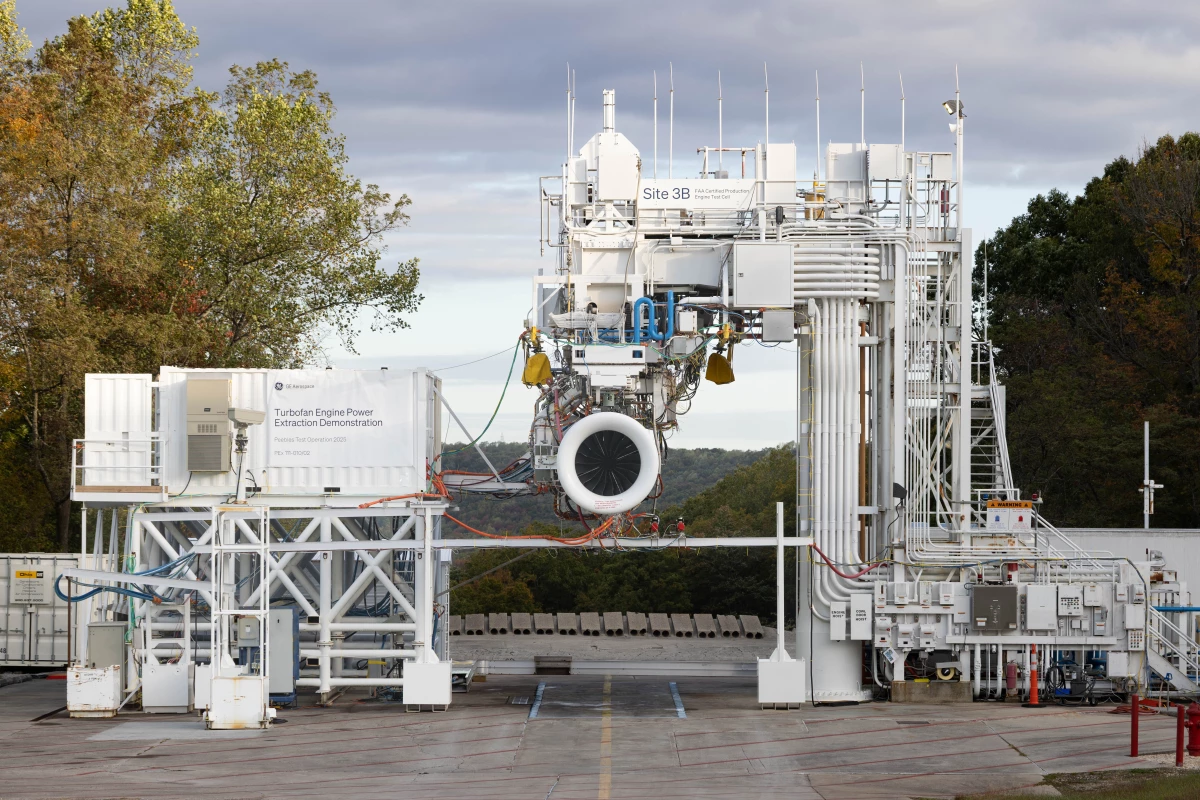
A hybrid-electric jet engine might seem as unusual as a zeppelin pulled by horses. Yet GE Aerospace is already conducting ground tests of a new megawatt-class hybrid turbofan engine and its complete power system, which is powerful enough to propel a medium-range narrow-body airliner.
Challenges of Aviation Electrification
Aerospace engineers have been working for decades to develop electric propulsion systems for aircraft, but they continue to face significant obstacles. Despite their advantages, electric motors depend on external energy sources, which remains the main barrier to their widespread adoption.
If an aircraft is powered by electric motors running, for example, on batteries, a major issue arises: the energy density of batteries is only 1/50th that of aviation fuel. To perform the same work as one pound of aviation fuel, you would need 50 pounds of batteries. Moreover, as fuel burns off during flight, the aircraft becomes lighter, whereas battery weight remains constant from takeoff to landing, negatively impacting efficiency.
As a result, heavy electric passenger planes can only develop in two directions: either as ultralight gliders with solar panels—essentially motorized gliders—or as aircraft with very limited range and small payload capacity.
GE Aerospace’s Hybrid Approach
So how did GE manage to create a hybrid-electric jet engine powerful enough for a Boeing 737? The key is that the electric part of the power system is designed to support the turbofan engine, not to replace it entirely.
Developed under NASA’s Electrified Powertrain Flight Demonstration (EPFD) and Hybrid Thermally Efficient Core (HyTEC) projects, the new engine includes components that can function both as motors and generators within the jet engine core. These are connected to the engine shaft and can be used either to spin the turbofan or to charge batteries and power onboard electrical systems. This setup eliminates the need for an auxiliary power unit or bleed air for electricity generation.
How the Hybrid System Works
The system operates in several modes. In generator mode, used during low-power phases of flight (such as descent or taxiing), the electric motor-generators (EMGs) produce high-voltage DC power to recharge onboard batteries and supply subsystems. In motor mode, during takeoff and climb, the EMGs use stored energy to help spin the engine shaft, increasing the speed of the fan and compressor without additional fuel consumption.
Since the system operates at the megawatt level, silicon carbide-based power inverters generate significant heat. To manage this, a special cooling system transfers heat from the electronics to the fuel, which acts as a heat sink.
Testing and Prospects
In recent ground tests with a modified GE Passport turbofan engine, the system was evaluated in various operating modes. According to GE, the hybrid setup demonstrated its ability to power narrow-body aircraft without the need for intermediate batteries. Additionally, the system was tested under simulated flight conditions to ensure the electrical components could withstand the thermal and vibrational stresses typical of real-world operation.
“Hybrid-electric propulsion is a key element in how GE Aerospace is reimagining the future of aviation. Our latest round of testing successfully demonstrated the hybrid-electric engine architecture for narrow-body aircraft, without requiring energy storage for operation. This is an important step toward realizing hybrid-electric commercial flights with technologies that meet customers’ demands for efficiency, reliability, and range,” said Arjan Hegeman, Vice President of Future of Flight at GE Aerospace.