

Gifted dogs learn words simply by overhearing.
A new study has shown that some gifted dogs are able to learn words simply by overhearing human conversations, much like young children. This ability is rare and does not require any special training.
Cursus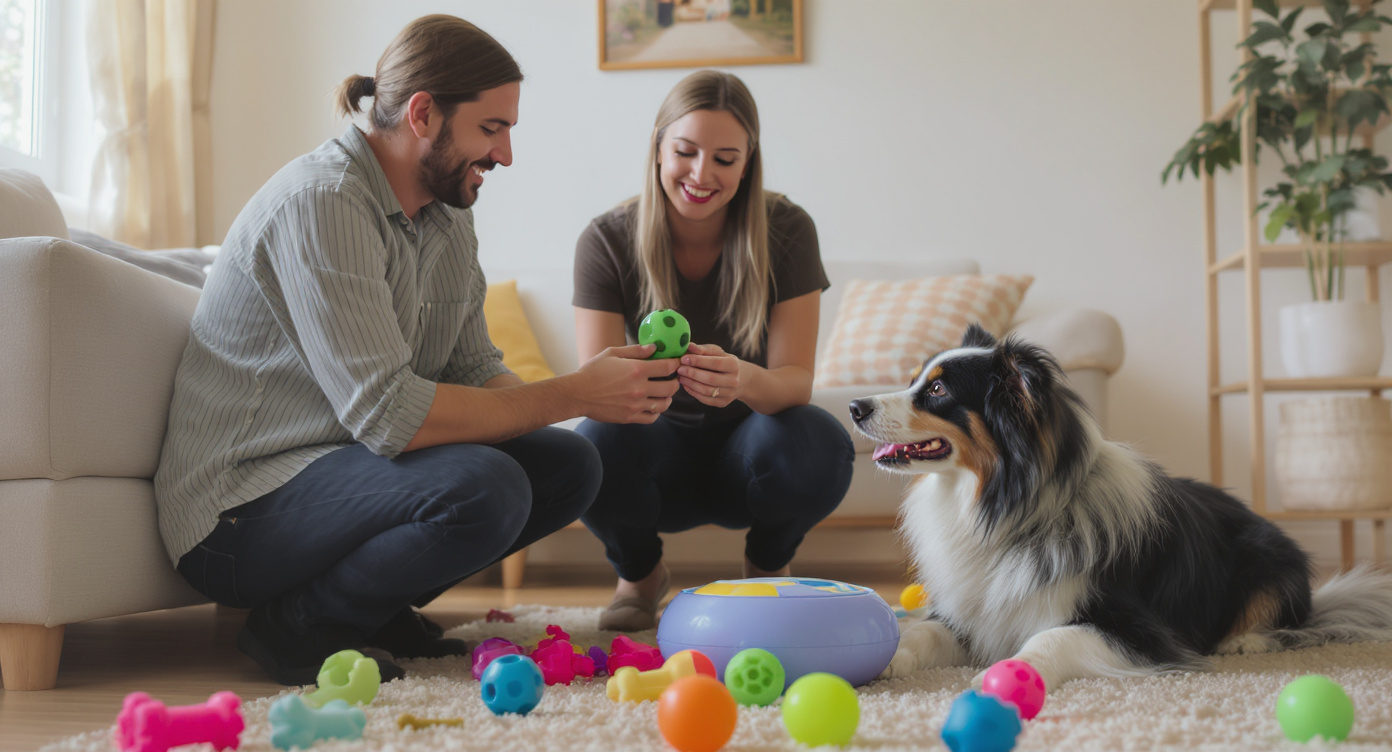
Ethologists have debunked the widespread belief that direct contact and training are necessary for animals to learn new words. Research has shown that a small group of gifted dogs can expand their vocabulary simply by observing human conversations, much like one-and-a-half-year-old children do.
It is well known that infants can remember new words just by listening to adults talk—a process called social learning through eavesdropping. Until recently, it was unclear whether other species, besides humans and perhaps great apes, were capable of such a complex social skill. Dogs have lived alongside humans for thousands of years, raising the question: can they also extract information from conversations not directly addressed to them?
In a study published in the journal Science, scientists tested this hypothesis. For the experiment, they selected 20 border collies: half were typical household pets, while the other half belonged to the rare Gifted Word Learner (GWL) group—dogs capable of remembering the names of hundreds of objects, not just standard commands.
During the experiment, the owner and an assistant acted out a scene: they exchanged a new toy and named it, completely ignoring the dog—without looking at or calling to it. The entire "ignore game" lasted eight minutes and was spread over four days—this was the only lesson.
To rule out simple Pavlovian associations (sound = sight of object), the task was made more challenging: the owner showed the pet a new toy (without naming it), then placed it in a bucket. Only after this, while looking into the bucket, did he say the toy’s name. Thus, the dog heard the word but saw only the bucket.
Afterwards, the dogs were brought into a room with various toys and asked to fetch the familiar items. The gifted dogs achieved a perfect score on the first try: they flawlessly found the new toy among the old ones, having learned its name solely by eavesdropping. Moreover, they retained this knowledge for a long time—repeat tests two weeks later were also successful.
The bucket experiment was also a success: the dogs found objects whose names they had learned blindly, understanding that the word referred to an unseen object inside the container. This puts their cognitive abilities on par with 18-month-old children. Ordinary dogs from the control group failed the tasks, confirming that this ability is not a species-wide trait but a unique talent of certain individuals.
Thus, the study proves that the complex social skills required for language development are not the exclusive prerogative of primates. Some dogs possess the cognitive tools to understand human dialogues, although this talent is extremely rare.