

Innovative textile cools, tracks movement, and generates energy
Researchers have developed an innovative nanofabric that reflects sunlight, cools the body, tracks movement, and can generate electricity without complex designs. This material opens up new possibilities for smart clothing with health monitoring and climate adaptation features.
Ingenium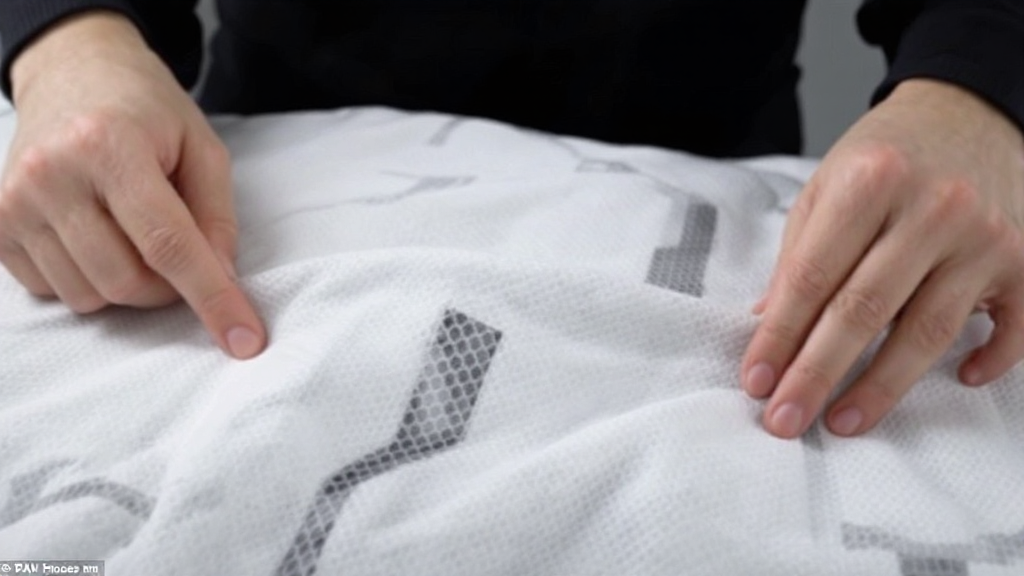
Although clothing is one of humanity’s basic needs, its technological development has lagged behind many other fields. Recently, an innovative textile was created that can be printed and is capable of providing cooling, tracking movement, and generating electricity without the need for external systems or complex multilayered structures.
Development of Nanocomposite Textile
Researchers from the Grainger College of Engineering at the University of Illinois have developed a nanocomposite textile based on zirconium dioxide (ZrO2). This material combines passive cooling with the ability to harvest energy from biomechanical movements.
How the Material Works
The material uses radiative cooling, reflecting up to 96% of incoming solar radiation, which helps keep the wearer cool outdoors. Additionally, it can emit the body’s thermal energy. The fabric also detects movement by sensing triboelectricity generated when the clothing rubs against the skin. The small amount of electricity produced can be used to send signals to integrated technologies or power small wearable devices.
Structural and Manufacturing Features
Unlike traditional fabrics that absorb a significant portion of solar heat and transfer it to the body, the new textile reflects 96% of solar radiation and has a 97% emission rate in the mid-infrared range, efficiently dissipating body heat. In direct sunlight, the fabric’s temperature was 3–6 °C lower than the surrounding air, a difference noticeable to the wearer.
The material can be produced using direct ink writing—a form of additive manufacturing based on extrusion.
Electricity Generation and Additional Functions
The fabric can generate electricity through the triboelectric effect, which occurs during movement and friction against the skin. A peak power density of about 47 mW/m² was recorded, with stable electrical output over more than 30,000 operation cycles. While this is not enough to charge a smartphone, the generated energy is suitable for powering sensors, tracking human movement, or serving as a trigger for control systems.
Integration with Electronic Systems
In experiments, the fabric was combined with a conductive textile substrate to create an adaptive thermoregulation system. When at rest, it provided passive cooling, while movement activated a triboelectric signal that triggered a heating element in the substrate. The ZrO2 material itself did not generate heat but simply sent a signal to activate the substrate, which was equipped with its own electronics.
Potential Applications
The triboelectricity generated can be used in various systems. For example, textile in pajamas could activate an alert when a certain level of movement is detected. This development opens up new possibilities for creating clothing with health monitoring, climate adaptation, and interactive control functions—without the need for complex multilayered designs.