

Toyota unveils a hydrogen-powered pickup for the Dakar Rally
In 2027, Toyota will unveil the zero-emission hydrogen-powered DKR GR FC Hilux pickup at the Dakar Rally to test new technologies in extreme conditions. The data collected will help develop a production version by 2028.
Ingenium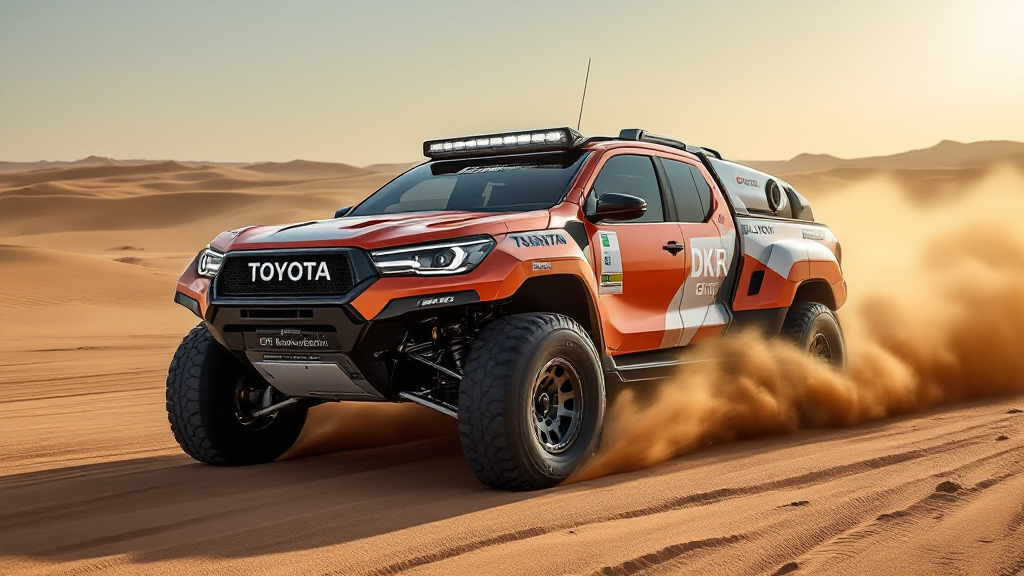
The Dakar Rally is considered one of the toughest challenges in motorsport, where participants must cover thousands of miles across sand dunes, rocky terrain, and endure the extreme temperatures of the desert. Traditionally, powerful large-displacement gasoline engines have been used to tackle such demanding conditions.
In 2027, Toyota’s Gazoo Racing team plans to introduce a new approach to extreme off-roading by using hydrogen fuel cells instead of the conventional V6 engine. For participation in the Dakar Rally in Saudi Arabia, the company has developed the Toyota DKR GR FC Hilux—a hydrogen fuel cell electric vehicle (FCEV).
Technical Features and Partnerships
In the new version of the pickup, the standard twin-turbocharged V6 gasoline engine has been replaced with a zero-emission hydrogen powertrain. The project is being carried out as part of an international collaboration led by Toyota Gazoo Racing, with the involvement of Jameel Motorsport, DENSO, Toyo Tires, and the German engineering firm IAV. Development, assembly, and testing of the vehicle are taking place at Toyota’s research center in Zaventem, Belgium. Special attention is given to fine-tuning the complex thermal management systems required for fuel cell operation in desert conditions.
Hybrid Powertrain
The DKR GR FC Hilux features a hybrid architecture that combines second-generation fuel cells, as used in the production Mirai model, with third-generation components designed for heavy-duty trucks. This system is engineered to perform in conditions comparable to those faced by diesel engines.
For the Dakar Rally, the vehicle is equipped with special hydrogen tanks capable of withstanding extreme impacts. The fuel cells are protected by a multi-stage filtration and cooling system that prevents dust ingress and overheating, even in high ambient temperatures.
Environmental Advantages
The hydrogen powertrain produces no harmful emissions—the only byproduct is water vapor.
Participation in Dakar Future Mission 1000
The DKR GR FC Hilux will compete in the Dakar Future Mission 1000 category, where alternative powertrains must complete 1,000 km of real rally stages. In this category, the vehicle will not compete for the overall win but will focus on demonstrating the capabilities of hydrogen technologies.
Industry Significance
Toyota’s entry into the Dakar Rally with a factory-built hydrogen fuel cell pickup prototype marks a new milestone in the development of zero-emission vehicles for extreme conditions. The company is leveraging its mass production capabilities to accelerate the adoption of robust and environmentally friendly transportation solutions.
Prospects for Mass Production
Toyota plans to use the data gathered during the 2027 rally to launch a production version of the Hilux Fuel Cell pickup by 2028. Testing in the harsh conditions of the Dakar Rally is seen as a reliability trial for the fuel cells, which should help advance the development of a new generation of practical zero-emission vehicles.