

Anduril Thunder: A New Autonomous Strike Tiltrotor
At the Farnborough Airshow, a new autonomous attack tiltrotor, the Thunder, was unveiled. Designed to support combat helicopters and reduce risks for their crews, the aircraft combines compact size, powerful weaponry, and high maneuverability. A fully operational prototype is expected next year.
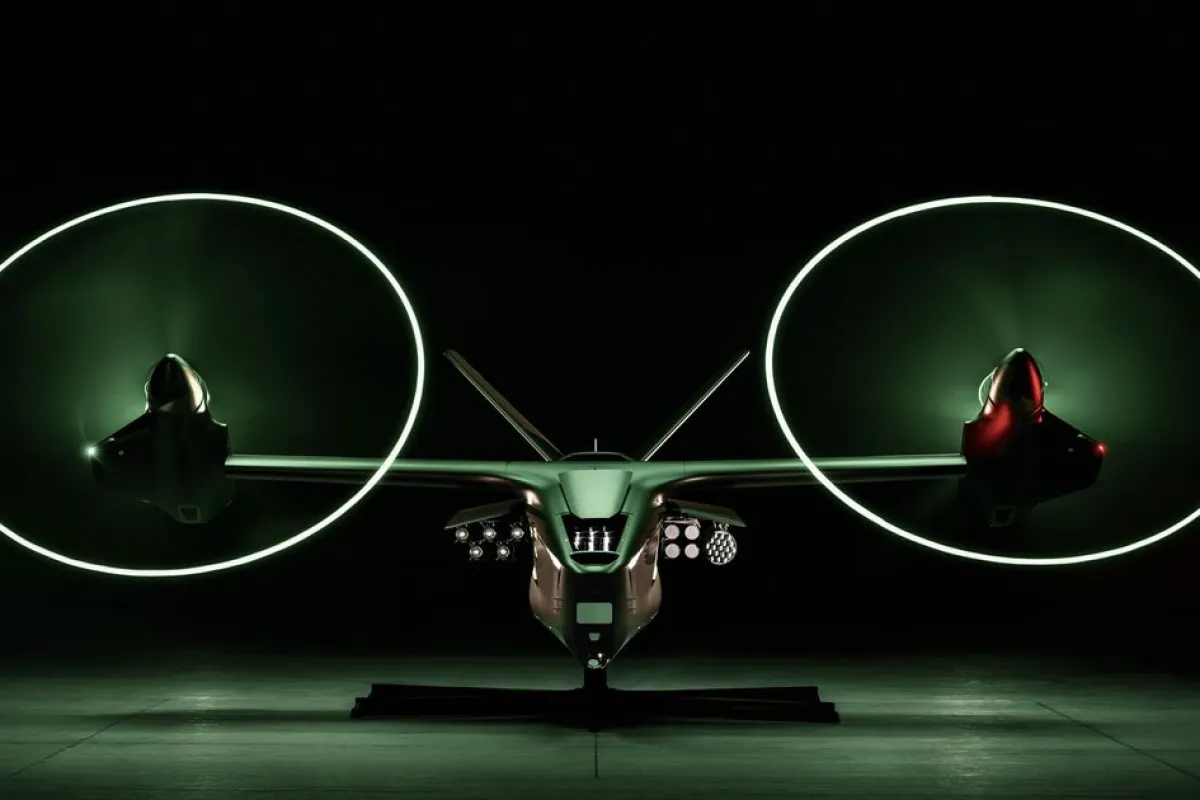
This year at the Farnborough International Airshow, Anduril unveiled its new fifth-generation autonomous strike tiltrotor, Thunder, designed to support combat helicopters as a loyal wingman.
Advancing the Concept of Autonomous Aircraft
While such systems are only beginning to enter service, the idea of deploying autonomous combat aircraft alongside traditional fighter jets is already widely adopted in aviation and defense sectors. As attack helicopters face increasing threats from drones and modern air defense systems, the loyal wingman concept is now being extended to rotary-wing platforms as well.
Thunder’s Features
Thunder was developed in partnership with Archer Aviation and is intended for missions in high-threat environments and at low altitudes. Its main goal is to reduce risks for crews and equipment, such as AH-54 Apache helicopters, by minimizing their direct involvement in combat while simultaneously boosting overall effectiveness through force multiplication.
Thunder is a compact tiltrotor capable of vertical takeoff and landing (VTOL), with a mass exceeding 599 kg. The aircraft is small enough to fit inside a standard cargo container, yet it is equipped with substantial armament. Its modular weapon system allows it to carry up to 10 guided air-to-ground missiles (including Hellfire and Barracuda-100M), 16 air-launched drones, up to 76 unguided 70mm rockets, and 12 counter-drone devices in the nose section. Additionally, Thunder can transport precision munitions, electronic warfare modules, or general cargo.
Technical Specifications and Effectiveness
Thunder features a hybrid-electric powerplant with optimized speed-tilting rotors (OSTR) and variable rotation speed, providing high maneuverability. Thanks to its ability to accompany attack helicopters, three Thunder units can triple the combat power of a single helicopter while incurring significantly lower costs compared to traditional alternatives.
Development Stage
A Thunder test model has already completed several trial flights. The full-scale prototype is expected to take to the skies next year.