

AI is making construction sites safer around the world
Artificial intelligence is increasingly being used to enhance safety on construction sites. Major companies are implementing AI solutions to assess risks, support employees, and prevent incidents, while still maintaining the essential role of human decision-making.
Aedis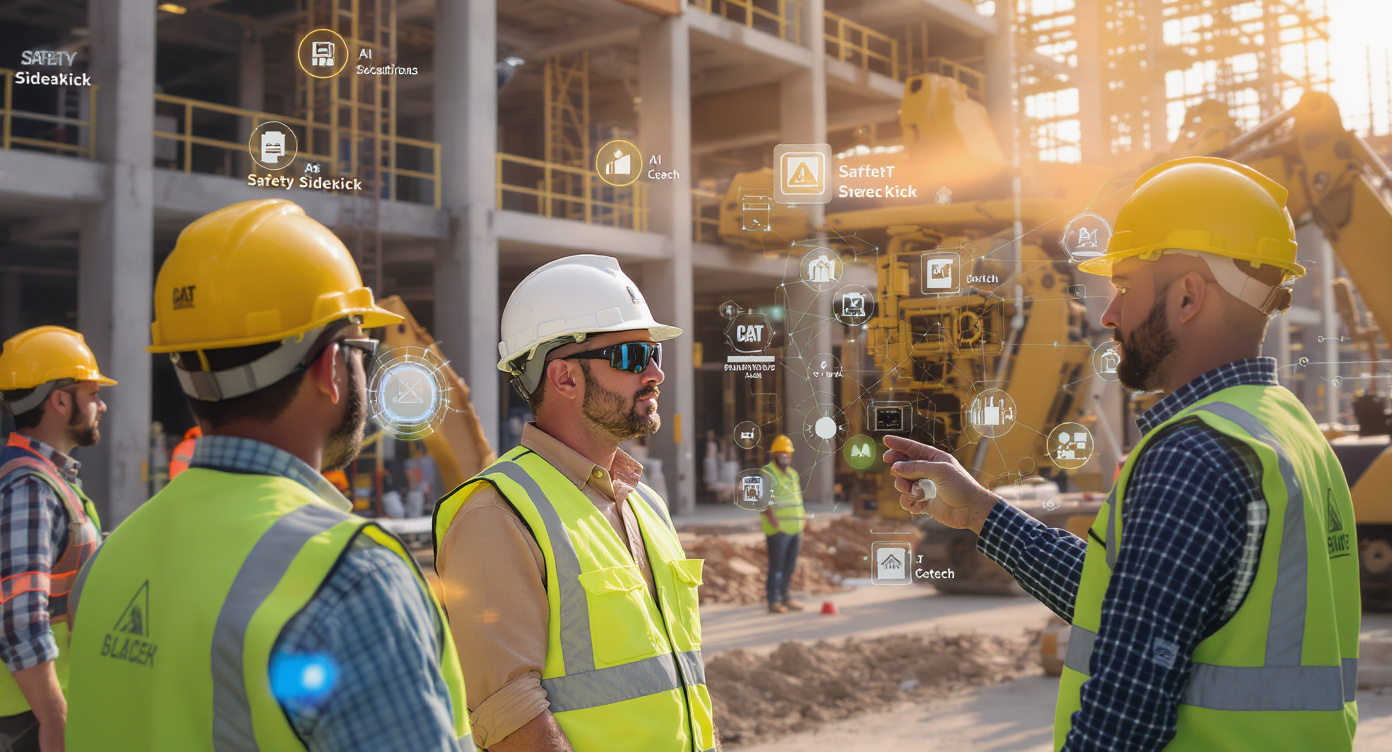
Using Artificial Intelligence to Improve Safety on Construction Sites
Artificial intelligence (AI) is increasingly being used not only to automate office processes but also to enhance safety standards on construction sites. During Construction Safety Week, which runs until Friday, contractors have the opportunity to pause work and focus specifically on occupational safety issues. This year, the topic of AI implementation has become a central point of discussion.
Major construction companies such as Skanska, Turner Construction, and Balfour Beatty are already leveraging AI to ensure the safety of their employees.
Skanska’s Solutions: Sidekicks and Safety Sidekick
The Swedish company Skanska has introduced its own AI solutions, called Sidekicks, at its sites. In February 2024, the first Sidekick was launched, capable of answering employees’ project-related questions using the company’s internal data.
In 2025, Skanska unveiled the Safety Sidekick tool—a generative AI that analyzes Skanska’s Occupational Health and Safety Guide, OSHA standards, and other safety documents. Currently, Safety Sidekick is mainly used for planning purposes but also supports incident response scenarios.
This tool utilizes site data to improve planning and analyze past events. All information is reviewed by the EHS team to ensure its accuracy and relevance, reducing the risk of incorrect answers. If the tool lacks information on a particular question, it notifies the user to avoid providing unreliable data.
SafeT Coach by Turner Construction
New York-based Turner Construction, after collaborating with OpenAI, developed the SafeT Coach tool, which is now available to the entire construction industry nationwide. SafeT Coach is a generative AI trained on the company’s data related to environmental, occupational health, and safety issues. It provides builders with clear and straightforward answers to their questions.
The current version operates on OpenAI’s ChatGPT platform, while the next version will use Google’s Gemini, allowing users to choose the most suitable tool. Two versions are planned: one for internal use and one for external users.
SafeT Coach can generate decision-making diagrams, checklists, and links to regulatory documents, helping facilitate safety discussions with contractor managers. Since the pilot launch, there have been over 25,000 recorded interactions with employees, contractors, and field teams.
Balfour Beatty’s Intelligent Signaling
London-based Balfour Beatty places special emphasis on safety at road construction sites, where vehicle movement is a leading cause of accidents. Operators of heavy machinery face numerous risks, including the need to monitor GPS directions, vehicle movement, people on site, and other equipment.
To enhance safety, the company uses Caterpillar’s Cat Detect system, equipped with intelligent cameras. The system tracks the proximity of people to heavy machinery and issues an alert when someone gets too close. Sensors respond to speed and movement, and the alert level increases as a person approaches the machine. The system can distinguish between people and inanimate objects, and when certain boundaries are crossed, it triggers visual or audio warnings.
Additional signals can be installed for people on site, which is especially important in noisy environments where equipment sounds may drown out warnings.
The Human Role in Ensuring Safety
Despite the adoption of advanced technologies, the responsibility for safety decisions remains with people. AI provides additional information to help operators make the right choices in the complex environment of a construction site.