

YouTube is testing complaints about low-quality AI-generated content
YouTube is testing a feature that allows users to flag suspicious and low-quality AI-generated videos, which could affect their visibility and monetization. This new rating system complements the standard moderation tools and helps the platform combat poor-quality content.
Crius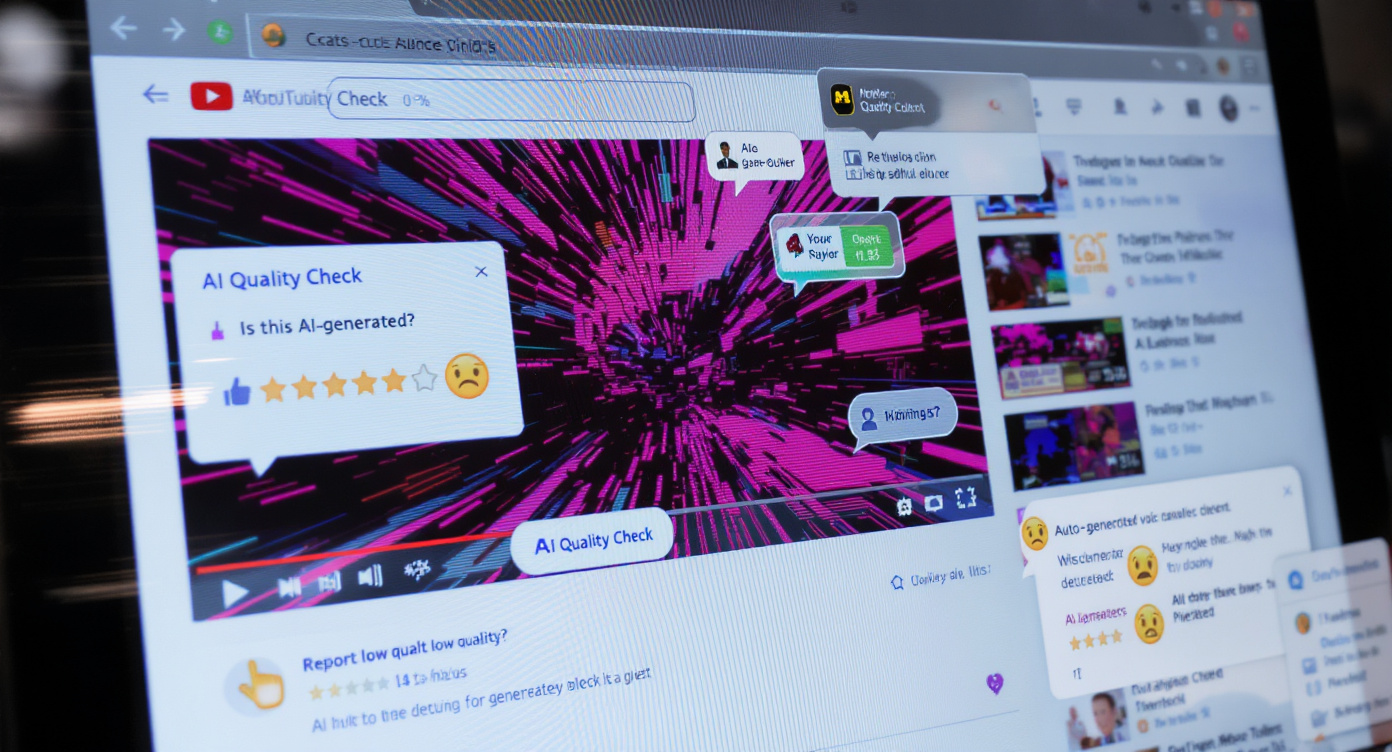
In the near future, YouTube users may gain more influence over the visibility and monetization of videos on the platform. YouTube has begun testing a feature that allows select viewers to flag suspicious videos as low-quality AI-generated content. At the same time, the company is expanding its data collection to improve its own generative AI models.
YouTube’s Approach to AI Content
YouTube permits the publication of videos created with machine learning and encourages the use of such technologies to enhance content. However, the platform has also announced its intention to combat low-quality AI-generated material. To address this, a new rating system is being introduced, in which viewers are asked to identify undesirable content produced by artificial intelligence.
Testing the New System
Some users have noticed pop-up windows in the YouTube app asking questions about the quality of AI-generated content. The response options range from complete denial to strong confirmation of the presence of low-quality AI. Currently, this feature is undergoing limited testing.
Use of AI Tools by Creators
Content creators are free to use generative AI tools to enhance their videos, including automated voiceovers, editing, and graphics. However, there is a growing number of videos produced almost entirely without human involvement. Such videos are allowed as long as they are not considered low-quality. Otherwise, channel owners may lose access to monetization.
Compliance Checks
To determine whether videos meet YouTube’s standards, both automated and manual reviews are used. Recent studies have shown that over 20% of short videos on the platform are low-quality, repetitive, or misleading. As a result, the company is introducing additional evaluation tools to supplement the familiar “like/dislike” mechanisms.
Limitations of User Ratings
Relying on viewer opinions also has its limitations, as not everyone can recognize artificial deepfakes. Additionally, channel fans may be reluctant to flag videos as low-quality.
Potential Consequences and Data Collection
Expanding the rating system could lead to an increase in the amount of data provided by users. Some believe this data is used to train AI models capable of creating content that is harder to detect and more effective at misleading audiences.