

Stratospheric Balloon S2000: A New Step in Wind Energy
China has successfully tested the world's first megawatt-class stratospheric wind energy system, the S2000 SAWES—a balloon equipped with turbines capable of generating electricity at an altitude of 2,000 meters. This innovative system promises mobility, easy deployment, and access to more stable winds, opening up new opportunities for clean energy.
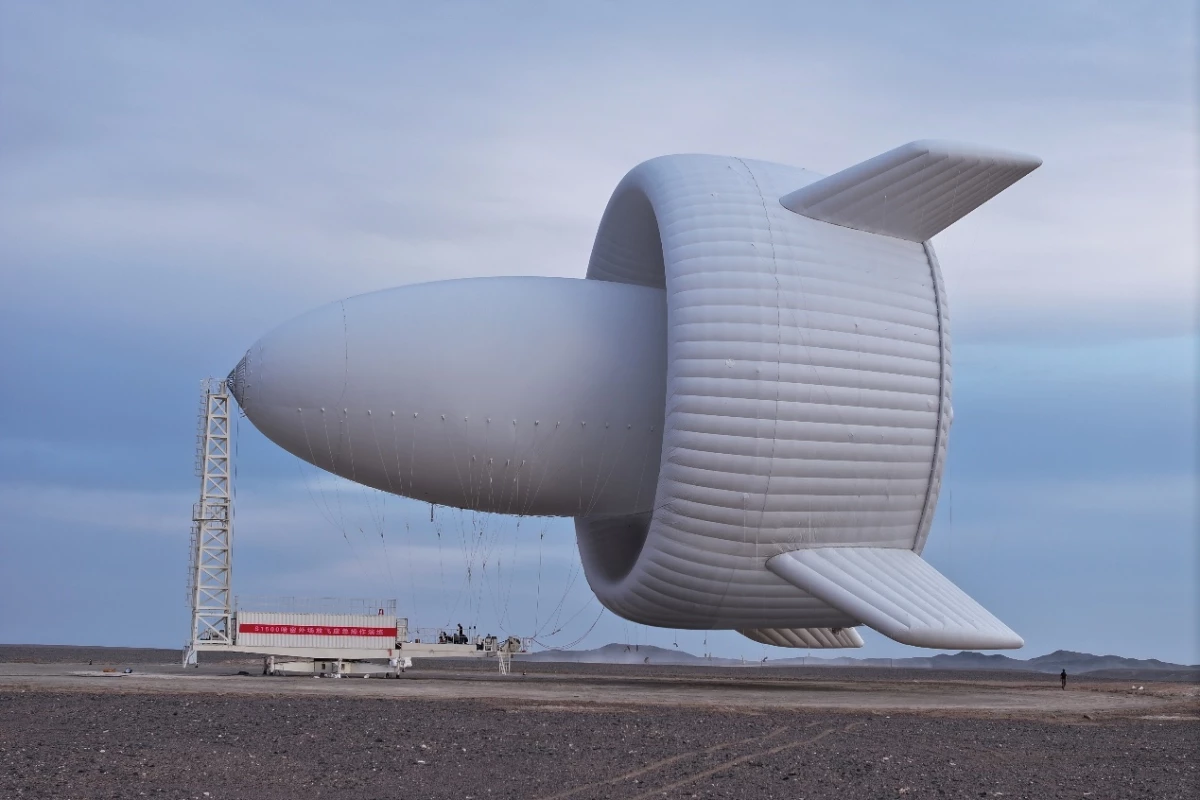
An unusual object appeared in the sky, resembling a bird or an airplane, but in reality, it was a 20,000-cubic-meter aerostat capable of generating electricity at an altitude of 2,000 meters. This is the S2000—the world’s first megawatt-class stratospheric airborne wind energy system (SAWES), developed by Beijing-based Linyi Yunchuan Energy Technology. The system recently completed successful flight tests, generating electricity from high-altitude winds without the need for towers or extensive ground infrastructure.
A New Era in Wind Energy
In the quest for clean and renewable energy sources, humanity is increasingly harnessing wind, solar, and water power. Wind energy, in particular, has seen remarkable progress: according to the Global Wind Energy Council, global installed capacity is expected to reach 1,245 GW by June 2025. The S2000 SAWES team believes that the successful tests conducted last month in Yibin (Southwest China) mark a significant step forward in the development of high-altitude wind energy technologies.
How the S2000 SAWES System Works
The S2000 SAWES is an integrated system where all the energy generation equipment is housed inside the aerostat. The system measures 60 × 40 × 40 meters. Inside the helium-filled aerostat are 12 turbines. Once inflated, the aerostat ascends to the designated altitude and is held in place by a tether.
Thanks to its lightweight design, the system requires no additional energy to ascend—it rises and floats freely without engines. At altitude, the turbines convert wind energy into electricity, which is transmitted to the ground via the tether.
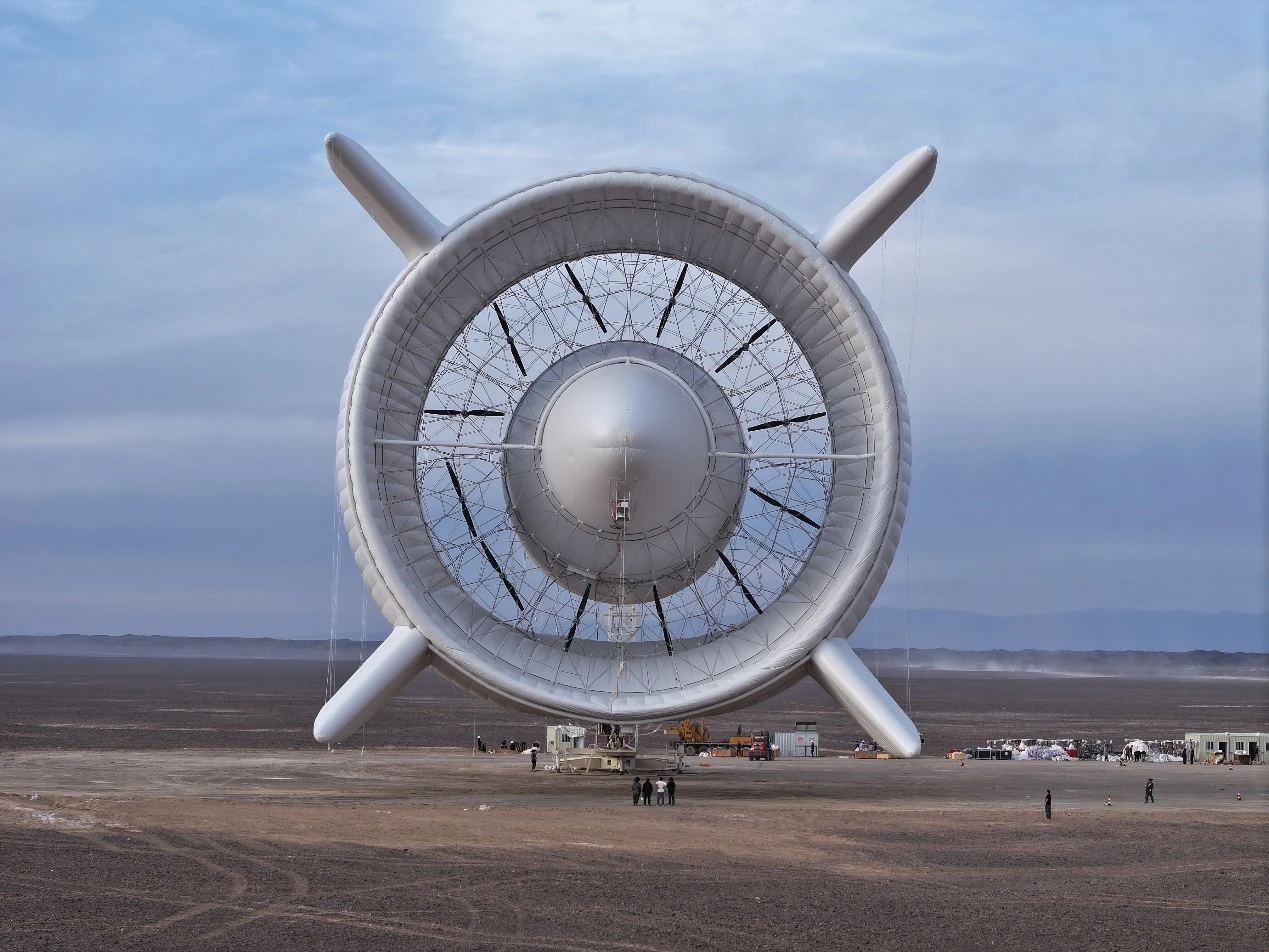
Advantages and Uniqueness of Airborne Turbines
Airborne wind turbines are not a new concept. In recent years, several aerodynamic designs have been developed, ranging from kite-based systems to aerostat solutions supported by companies like Google (Makani Power). However, most of these have remained at the prototype stage or proved commercially unviable.
The S2000 SAWES represents a breakthrough in high-altitude energy systems. Its test flight marked the transition from experimental validation to practical engineering application.
“At its current power level, the system can fully charge about 30 premium electric vehicles from zero to full in just one hour,” notes Linyi Yunchuan Energy Technology CEO Dun Tianzhui.
Why Do We Need Airborne Wind Energy Systems?
Modern industrial wind turbines are massive: hub heights reach 80–120 meters, blade lengths are 45–75 meters, and offshore turbines are even larger. Such dimensions make installation in densely populated cities with high-rise buildings impossible, so wind farms are located in remote areas, and electricity is transmitted via power grids.
Another important factor is wind reliability. As altitude increases, wind strength and stability improve due to reduced interference from terrain, buildings, and vegetation. This is why modern turbines are built so tall.
The S2000 SAWES addresses both these challenges. At 2,000 meters, the system floats 1,000 meters above the world’s tallest building, the Burj Khalifa, eliminating any impact on city landscapes and allowing deployment above urban areas. The altitude provides access to strong, consistent winds.
Mobility and Ease of Deployment
Another advantage of the S2000 is its ease of deployment. Unlike traditional turbines that require massive foundations, cranes, and months of construction, the entire system can be transported in standard containers. According to the developer, setup—from site preparation to inflation and launch—takes 8–9 hours, or just 4–5 hours if lifting gas is available. This mobility allows the system to be used where conventional wind power is impractical: in remote areas, for temporary installations, disaster recovery, and emergency situations.
Linyi Yunchuan’s technical director, Wen Hanke, highlights two main application scenarios: autonomous facilities (such as border posts) and as a supplement to traditional ground-based wind farms, creating a three-dimensional energy supply structure.
Prospects and Challenges
Will we soon see white aerostats floating above our cities? For now, that seems unlikely. Although the S2000 has successfully passed experimental and concept stages, the technology is still quite new. According to the company, the device’s capacity is 3 MW—comparable to an average turbine—but during tests, it generated about 385 kWh, which was fed into the local grid.
Among the challenges is the shortage of helium, which could become a serious obstacle to the development of such systems. As with any new energy technology, commercial success will depend not only on peak capacity but also on reliability, lifespan, cost, and integration with existing power grids.