

LG introduces an innovative virtual display for cars
LG has unveiled a prototype of the Ultraview Windshield Display—a system that projects important information directly onto a car’s windshield, enhancing safety and creating a more minimalist interior. The technology is already being tested by automakers and could soon appear in production models.
Ingenium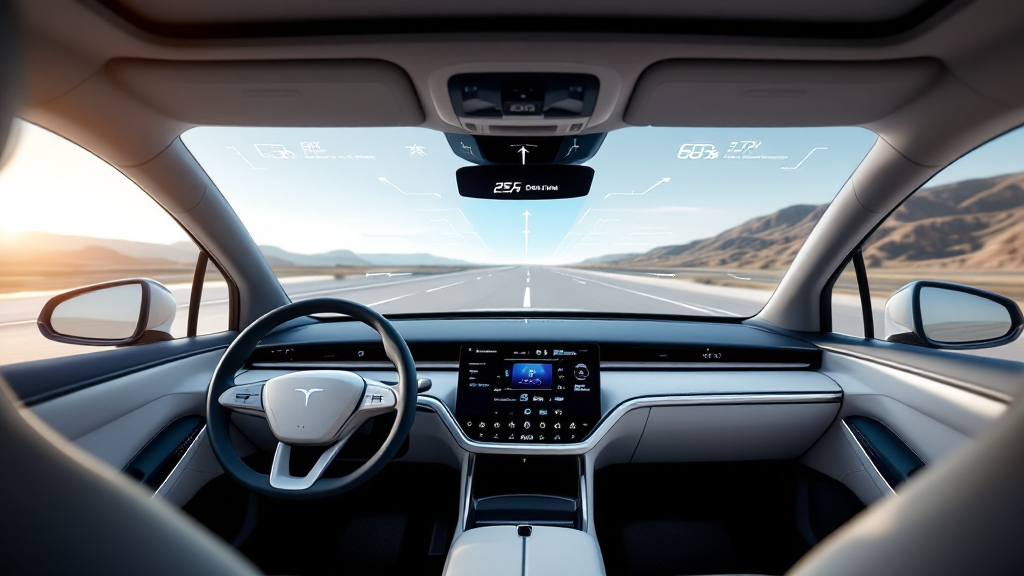
Virtual screens reminiscent of futuristic movie technology are gradually becoming a reality. South Korean company LG has unveiled a prototype called the Ultraview Windshield Display—an innovative system that automatically projects navigation data, speed, and multimedia information at various virtual distances in front of the driver, depending on their importance.
Ultraview Technological Features
The Ultraview Windshield Display combines a projection display for road information with a virtual screen for managing multimedia and climate control. The system is designed for use within the limited space of a car interior. When the vehicle is turned off, the display disappears completely, leaving no darkened areas or masking on the glass, which allows for minimalist and clean interior designs.
Instead of a physical screen on the dashboard, a hybrid optical module built into the dash reflects light onto the windshield. The first layer of the system projects essential data, such as arrows over real roads, creating the impression that information is floating directly in front of the car. The second layer is a virtual 20-inch screen positioned 1.2 meters in front of the driver’s eyes, where music, climate control, and settings are displayed.
Safety Advantages
The main goal of this technology is to improve road safety. By allowing the driver’s gaze to remain focused further ahead, it becomes possible to read messages from the dashboard without taking attention away from the road. Unlike traditional touchscreens that require drivers to look away, Ultraview places information at natural optical focal points, reducing unnecessary eye movement and cognitive load.
Compactness and Integration
LG’s breakthrough lies in combining a full digital instrument cluster and AR projector into a compact 15-liter unit, making the system compatible with most modern dashboards. Standard wide-angle AR-HUDs typically require large mirrors and bulky housings, complicating their integration.
Solving Optical Challenges
Projecting images onto a curved windshield can cause blurred double reflections. To address this, modern vehicles use special glass with integrated angular zones or permanent dimming. The Ultraview optical module eliminates these drawbacks with a focus-free projection system and digital distortion correction algorithms that account for the curvature of the glass. As a result, when the system is off, the windshield looks completely normal.
Contextual Awareness
In today’s premium cars, drivers often have to shift focus between the dashboard and basic HUDs, which can cause eye fatigue. LG’s system intelligently merges driver assistance notifications with road conditions, projecting data at different depths depending on its importance.
Implementation Prospects
Currently, Ultraview is at the prototype stage and is being tested by leading global automakers. While cars equipped with this system are not yet available for sale, annual deliveries of automotive HUDs are expected to double by 2032, indicating that such technologies will soon appear in production models.