

Searah launches Indonesia's largest gas project
The Searah joint venture has begun construction of the topsides for the FPSO Bahtera Haluan Lestari, a key component of Indonesia’s large-scale Kutei North Hub gas project. The $11.8 billion project aims to advance the country’s energy sector, create new jobs, and introduce innovative technologies. It also has the potential to position Searah as one of the leading players in Southeast Asia’s oil and gas industry.
Petrus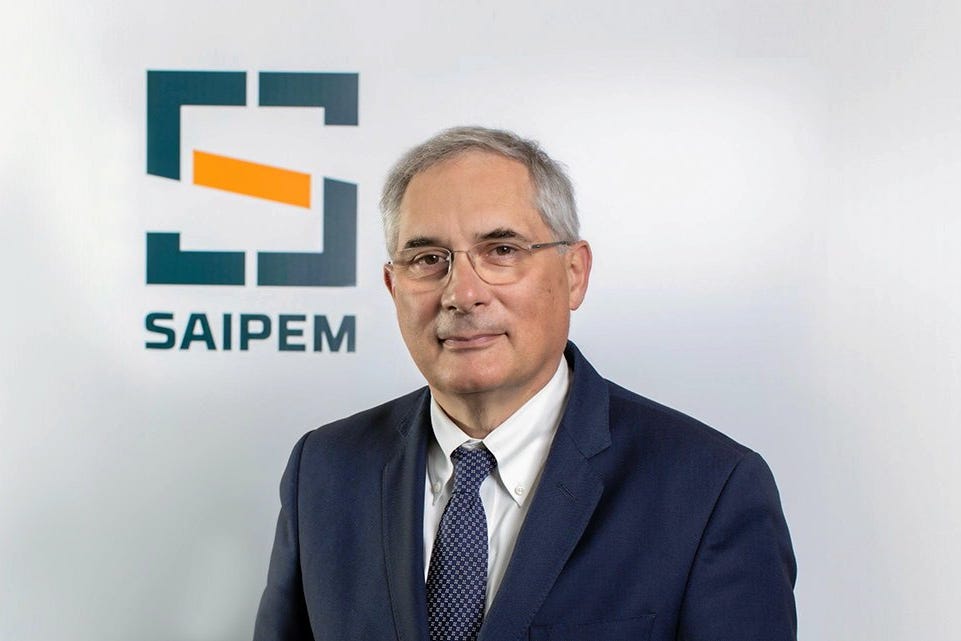
Searah has begun construction of topsides for the FPSO Bahtera Haluan Lestari
The Searah joint venture, established on a parity basis by Eni and Petronas, has started manufacturing the topsides for the floating production, storage, and offloading unit (FPSO) Bahtera Haluan Lestari at the Saipem shipyard on Karimun Island, Indonesia. The FPSO is valued at $2.9 billion, while the Kutei North Hub project, for which the vessel is intended, is estimated at $11.8 billion.
FPSO specifications and field details
The FPSO Bahtera Haluan Lestari will be deployed to develop the Geng North and Gehem gas fields in the Kutei Basin, off the coast of East Kalimantan province, Indonesia. The vessel is designed to process up to 1 billion cubic feet of gas and 80,000 barrels of condensate per day, as well as store up to 1.4 million barrels of oil. The installation will be connected to 16 wells from two offshore fields. The Geng North field, discovered in 2023, contains 5 trillion cubic feet of gas with a high condensate content and includes a structure with reserves of 400 million barrels of condensate.
Project significance for the energy sector
The Kutei North Hub project is considered one of the largest investments in Indonesia’s energy industry. The project is expected to introduce new technologies and foster the development of the domestic oil and gas engineering sector. The launch is scheduled for the fourth quarter of 2028. The 300-meter-long FPSO will be stationed at a depth of around 2,000 meters. The produced gas will be used for LNG production at Bontang LNG and for the domestic market.
Contribution to national goals and employment
The project aims to help achieve Indonesia’s national production targets for 2030, set by the government: 1 million barrels of oil and 12 billion cubic feet of gas per day. Construction of the topsides modules is concentrated at the Saipem shipyard in Tanjung Balai, Karimun, as well as at shipyards on Batam and Bintan islands. This construction phase is expected to create around 8,000 local jobs.
Searah’s market position
Searah is a strategic enterprise uniting 19 oil and gas assets in Indonesia and Malaysia. The company is projected to significantly reshape the oil and gas sector in Southeast Asia and become one of the region’s leading operators. Since its founding, Searah has produced over 300,000 barrels of oil equivalent per day, with expectations to increase this figure to 500,000 barrels (excluding shares) by 2029, and a long-term potential exceeding 800,000 barrels per day.
Development prospects
By 2030, Searah is forecast to become the largest oil and gas producer in Southeast Asia, surpassing companies such as Pertamina, Petronas, PTTEP, Shell, and BP. In addition to its main investment program, the company’s growth platform includes exploration in Kutei, the Abadi LNG project, and assets off the coast of Malaysia. Potential expansion into Vietnam, deepwater Sabah, and the Andaman Sea could provide further growth opportunities.
Strategic importance for the industry
Searah is seen as the first major test in creating an independent regional leader in the oil and gas sector by combining complementary asset portfolios. Successful implementation of this model could serve as an example for future oil and gas partnerships in Asia.