

The United States has delivered a nuclear reactor by air for the first time.
The US Department of Defense has, for the first time, carried out an air transport operation of a complete nuclear reactor for military purposes. This operation demonstrated the ability to quickly deliver and deploy modular reactors in remote areas, which will enhance the energy independence of military facilities.
Vigor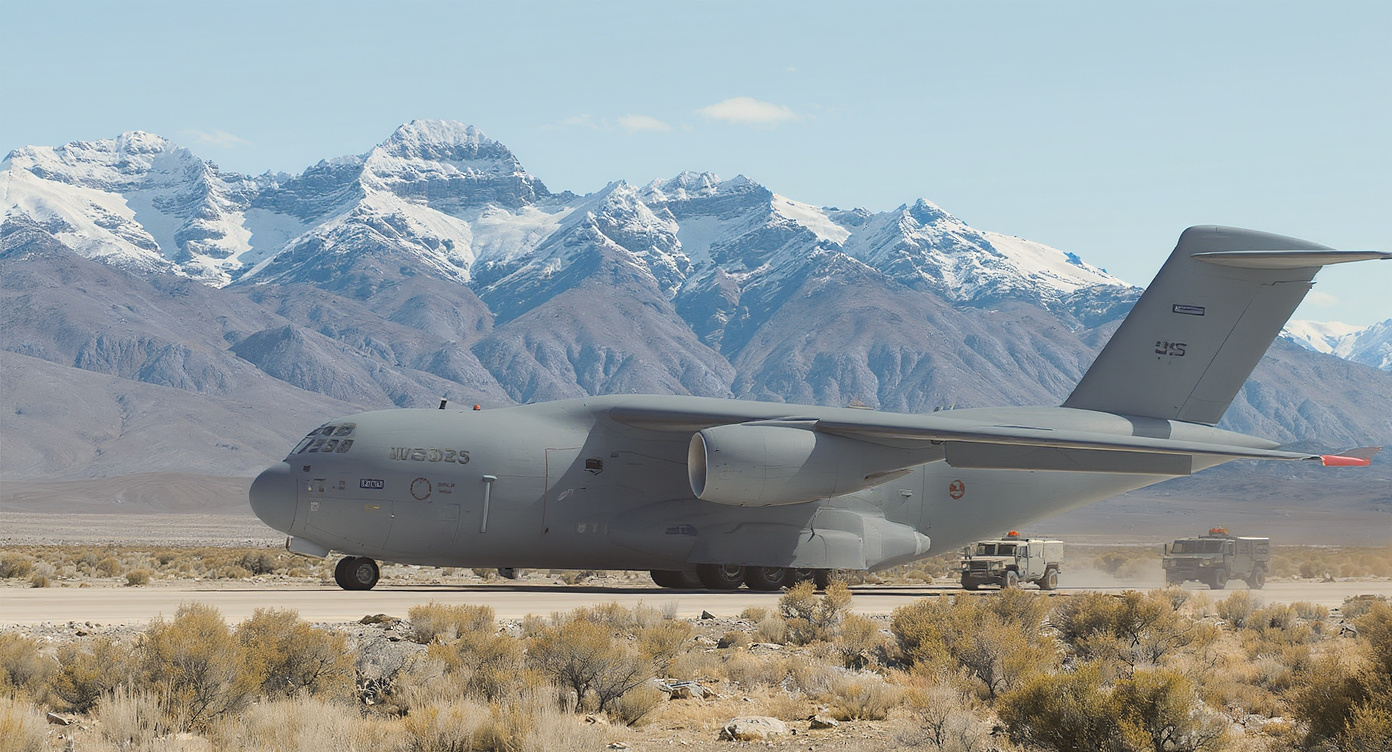
For the first time in global practice, the US Department of Defense has carried out the air transport of a complete 5 MW nuclear reactor using a C-17 Globemaster III transport aircraft. The reactor was moved from March Air Force Base in California to Hill Air Force Base in Utah for subsequent assembly and operation.
Operation Windlord and the Janus Program
As part of the Janus program, Operation Windlord was conducted on February 15, 2026. During this operation, three C-17 aircraft delivered the new Ward250 microreactor, disassembled into eight separate modules without fuel. The modules were placed in containers or on platforms, enabling rapid transportation.
The exercise was conducted by the 62nd Airlift Wing, the only US Air Force unit certified for regular nuclear weapons transport, ensuring a high level of safety and reliability. The demonstration proved that a nuclear reactor can be transported like standard equipment and delivered to remote areas with runways as short as 1,000 meters.
On site, the reactor can be assembled, fueled, and brought online in a short time. The launch of Ward250 is scheduled for July 4, 2026, in accordance with Presidential Executive Order 14301. Previous attempts have been made to airlift nuclear reactors, but this is the first instance of delivering a complete reactor as part of a repeatable, commercial-type logistics chain for military and industrial needs, rather than a one-off scientific experiment.
Program Goals and Objectives
The main objective of the exercise was not only to demonstrate the possibility of transporting a small reactor by aircraft, assembling it, and starting it up, but also to provide the US armed forces with reliable energy sources in various locations, including remote areas. Some military bases, especially in Alaska, face lengthy, costly, and complex fuel and electricity supply chains. Additionally, the US domestic power grid is aging and becoming less reliable, while recent requirements to increase the share of wind and solar energy have complicated access to electricity, particularly in harsh weather conditions.
To address these challenges, the Janus program focuses on developing rapid deployment capabilities for nuclear reactors for military and humanitarian purposes. It is expected that this will help maintain full operational readiness of bases and accelerate the development of technologies and procedures that support the revival of American nuclear energy.
Technical Specifications of Ward250
Developed by Valar Atomics, the Ward250 is a high-temperature gas-cooled reactor (HTGR) that uses TRISO fuel. The fuel granules, made from high-assay low-enriched uranium (HALEU) enriched from 5% to 20%, are coated with layers of carbon and ceramics and formed into spherical elements. The fuel is loaded into the reactor via a hopper, and during the chain reaction, it is cooled by helium to an operating temperature of 750 °C.
This design allows for modular reactors that can be assembled at factories and transported to the site of operation. The nuclear reaction is self-regulating, and cooling is primarily passive, ensuring a high level of safety.
Application Prospects
The Ward250 is designed for rapid deployment and operation in various conditions, which can enhance the energy independence of military facilities and accelerate the adoption of new technologies in the energy sector. The Janus program is seen as a step toward advancing American nuclear energy and ensuring stable power supply in challenging and remote regions.